

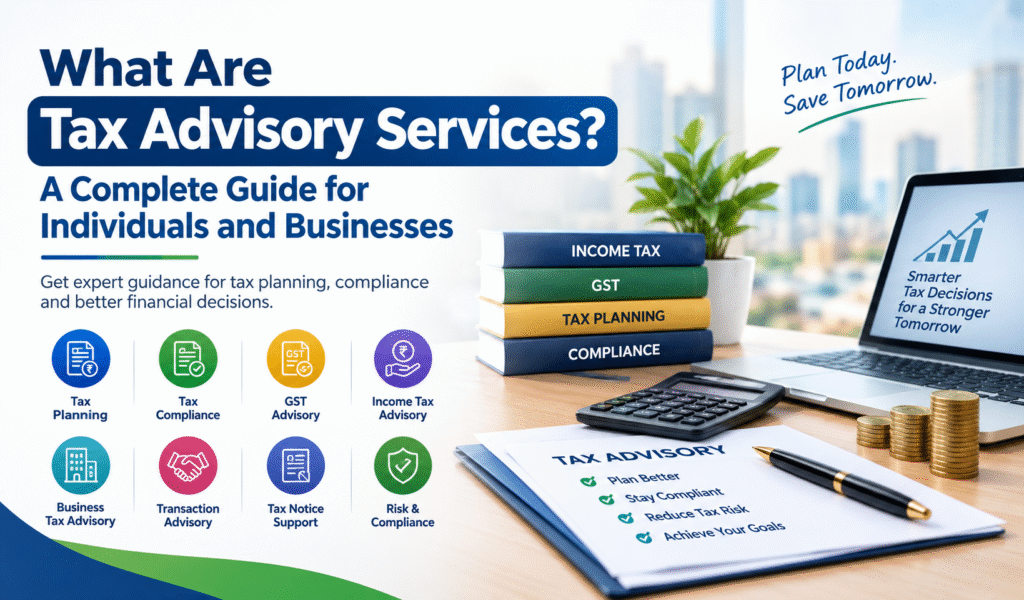
Tax advisory services help individuals and businesses understand their tax obligations, plan transactions, manage compliance, and make better financial decisions within applicable tax laws.
Unlike basic tax filing, tax advisory focuses on what you should consider before making a financial or business decision. A tax advisor may help with tax planning, compliance, business transactions, GST matters, tax notices, reporting requirements, and other tax-related decisions.
For businesses, good tax advice can be especially useful because tax decisions often affect cash flow, profitability, business structure, investments, and long-term planning.
Key Takeaways
- Tax advisory combines tax planning, compliance support, and strategic tax guidance.
- Businesses can use tax advisory before major financial or commercial decisions.
- Tax compliance includes timely filing, reporting, documentation, and responding to applicable requirements.
- GST can create separate registration, return, payment, and reporting obligations for applicable businesses.
- Tax planning should focus on lawful and well-documented decisions, not artificial arrangements designed only to avoid tax.
- The Income Tax Department provides online services for returns, tax payments, forms, compliance, notices, and other taxpayer services.
- India’s tax framework is evolving, including the transition to the Income Tax Act, 2025 from 1 April 2026.
- Professional tax advice can help businesses identify tax risks before they become expensive problems.
What Are Tax Advisory Services?
Tax advisory services are professional services that help taxpayers make informed decisions about tax planning, tax compliance, reporting, transactions, and tax-related risks.
The exact scope depends on the taxpayer and the advisor. For a small business, advisory may involve business tax planning, GST compliance, TDS-related matters, documentation, and tax notices. A larger company may need more complex advice involving transactions, restructuring, cross-border taxation, or regulatory requirements.
Professional tax services commonly cover the tax lifecycle from planning and accounting through compliance and tax-related disputes.
In simple words:
Tax filing tells you what needs to be reported. Tax advisory helps you understand what to consider before and while making decisions that have tax consequences.
Why Do Businesses Need Tax Advisory Services?
Businesses do not make financial decisions in a tax-free environment. Hiring employees, purchasing assets, expanding operations, entering contracts, restructuring a business, or making investments can all have tax implications.
Tax advisory helps business owners evaluate these implications before committing to important decisions.
For example, a business planning to expand into another state may need to consider its GST position, invoicing process, registrations, accounting records, and other applicable compliance requirements.
The objective is not simply to reduce taxes. It is to manage tax obligations correctly while supporting the business’s broader financial objectives.
EY similarly describes tax planning as combining tax considerations with business objectives, compliance, and strategic decision-making.
10 Benefits of Tax Advisory for Small Businesses in Canada
What Services Are Included in Tax Advisory?
Tax advisory is a broad category. The services offered can differ according to the taxpayer’s circumstances and the advisor’s professional scope.
Common areas include:
1. Tax Planning
Tax planning involves considering the tax consequences of financial or business decisions before they are implemented.
For example, a business may seek professional advice before purchasing significant assets, restructuring its operations, entering a transaction, or changing its business structure.
The goal should be lawful and well-supported tax planning, not hiding income or creating artificial transactions.
Good planning considers the applicable law, documentation, timing, commercial purpose, and potential tax consequences.
2. Income Tax Advisory
Income tax advisory helps taxpayers understand issues related to income, deductions, taxable transactions, reporting, and applicable compliance requirements.
The appropriate treatment can depend on factors such as the taxpayer’s status, type of income, business structure, transactions, and applicable provisions.
India’s Income Tax Department provides services covering income-tax returns, forms, tax payments, reassessment proceedings, TDS compliance, appeals, revisions, and other taxpayer matters.
3. GST Advisory
Businesses registered or required to comply under GST may need assistance with registration, return filing, tax payments, input tax credit, invoicing, reconciliations, notices, and related compliance matters.
The GST portal provides services including registration, return filing, tax payments, refunds, amendments, electronic ledgers, and other taxpayer functions.
For example, eligible normal taxpayers use Form GSTR-3B to declare GST liabilities for the relevant tax period and discharge the applicable tax liability.
A GST advisor can help a business understand its responsibilities and maintain processes that support accurate reporting.
4. Tax Compliance Services
Tax compliance focuses on fulfilling applicable legal and reporting obligations correctly and on time.
It may include:
- Tax return preparation and filing
- GST return support
- TDS-related compliance
- Tax payments
- Record and documentation review
- Reconciliations
- Responding to applicable notices
- Compliance calendars
- Reporting requirements
The Income Tax Department’s taxpayer services include return filing, forms, payments, notices, rectification, grievances, and compliance-related services.
Compliance is often where small mistakes become unnecessarily expensive. A missed deadline or unsupported claim can create additional work, interest, penalties, or disputes depending on the circumstances.
5. Tax Notice and Assessment Support
Receiving a tax notice does not automatically mean that a taxpayer has committed wrongdoing.
However, a notice should not be ignored.
Tax advisory professionals can help review the notice, understand what information or response is required, organize supporting records, and prepare an appropriate response within the applicable framework.
The Income Tax Department provides online facilities for various compliance matters, including e-campaigns, e-verification, e-proceedings, and other compliance functions.
6. Business Tax Advisory
Business tax advisory examines tax issues in the context of a company’s operations.
It can become relevant when a business is:
- Starting a new venture
- Expanding operations
- Purchasing significant assets
- Changing its business structure
- Entering a major commercial transaction
- Adding new products or services
- Working with businesses in other jurisdictions
- Considering restructuring
The advisor’s role is to identify relevant tax considerations before the decision is finalized.
7. Transaction Tax Advisory
Some business transactions can have complicated tax consequences.
Examples may include mergers, acquisitions, investments, restructuring, or significant commercial transactions.
Professional tax advisory can help evaluate potential tax exposures, documentation requirements, and structuring considerations before the transaction proceeds.
Transaction tax advisory commonly includes areas such as tax-efficient structuring, due diligence, transaction planning, and compliance strategy.
What Is the Difference Between Tax Advisory and Tax Filing?
Tax filing is primarily about preparing and submitting the required tax return or form.
Tax advisory is broader and can involve planning, interpretation, risk assessment, compliance strategy, and decision-making.
| Tax Filing | Tax Advisory |
|---|---|
| Focuses on submitting required returns | Focuses on tax-related decisions |
| Usually periodic | Can be ongoing or transaction-based |
| Reports financial information | Helps evaluate tax implications |
| Compliance-focused | Planning and risk-focused |
| Often deadline-driven | Can happen before a transaction |
| Uses available financial records | May influence future decisions |
Think of it this way:
Tax filing is reporting what happened. Tax advisory helps you understand the tax implications of gvsc yiuoa.
Both can work together.
Who Can Benefit From Tax Advisory Services?
Tax advisory is not limited to large corporations.
Small Businesses
Small businesses may need help with:
- Income tax compliance
- GST
- TDS
- Business expenses
- Tax notices
- Financial documentation
- Business expansion decisions
A professional advisor can help the owner understand which tax issues require attention instead of discovering them after a deadline.
Startups
Startups often make important decisions quickly.
Choosing a business structure, raising funds, hiring employees, entering contracts, or expanding operations can create tax considerations.
Getting advice early can help founders understand the potential consequences before making a major decision.
Established Companies
Established companies may require more specialized advisory support for transactions, restructuring, tax risk management, compliance systems, and business expansion.
Individuals and Professionals
Individuals, consultants, professionals, investors, and high-income taxpayers may also require tax planning and compliance assistance depending on their financial circumstances.
The appropriate service depends on the individual’s income sources, transactions, residency, investments, and applicable tax rules.
How Does Tax Advisory Help With Tax Planning?
Tax planning works best when it starts before the transaction, not after the tax return is due.
Suppose a company plans to purchase expensive equipment. Instead of making the purchase first and asking tax questions later, management can seek advice about the applicable tax treatment, documentation, accounting implications, and cash-flow impact beforehand.
This creates an opportunity to make a more informed decision.
Tax planning should always operate within the law. It should not be confused with tax evasion.
Tax planning = lawful planning based on applicable tax rules.
Tax evasion = illegal concealment or misrepresentation intended to avoid tax.
A professional advisory process should prioritize compliance, documentation, commercial substance, and transparency.
Why Is Tax Compliance Important for Businesses?
Tax compliance protects a business from avoidable regulatory and financial risks.
Businesses are expected to maintain appropriate records and meet applicable filing and payment obligations. The Income Tax Department’s Taxpayers’ Charter specifically expects taxpayers to keep accurate records, respond in time, provide complete information, and pay amounts due within the applicable framework.
Good compliance also makes financial management easier.
When records are organized, a business can more easily:
- Track revenue and expenses
- Reconcile transactions
- Prepare returns
- Support tax positions
- Respond to queries
- Identify discrepancies
- Make better financial decisions
In other words, compliance is not just paperwork. It can become part of good business management.
What Has Changed With India’s Income Tax Act, 2025?
India’s income-tax framework has undergone a major legislative transition.
The Income Tax Department states that the Income Tax Act, 2025, replaced the Income Tax Act, 196,1 from 1 April 2026, while transitional provisions continue certain proceedings under the earlier law to avoid disruption.
The department describes the new Act as an effort to simplify the structure and language of income-tax law, reduce complexity, and make compliance easier to understand.
For taxpayers, this reinforces an important point:
Tax advice should be based on the rules applicable to the relevant financial year, assessment year, transaction, and taxpayer circumstances.
Old tax articles can become outdated quickly. Always verify current provisions before acting.
How Can You Choose the Right Tax Advisory Service?
Choosing a tax advisor should involve more than comparing fees.
Look at the following factors:
Relevant Experience
Choose a professional who understands your type of taxpayer and the tax issues relevant to your business or profession.
Compliance Knowledge
The advisor should understand applicable filing, documentation, reporting, and procedural requirements.
Communication
Tax matters can become confusing quickly. A good advisor should explain the issue in practical language instead of hiding everything behind technical terminology.
Documentation
Ask how the advisor handles records, working papers, supporting documents, and communication related to your engagement.
Proactive Approach
A useful tax advisor should not only react when a notice arrives. Where appropriate, they should help identify potential issues before they become problems.
Transparency in Fees
Understand what the professional fee covers.
Ask whether the quoted fee includes only return filing or also advisory meetings, GST work, notices, reconciliations, or other services.
What Questions Should You Ask a Tax Advisor?
Before engaging a tax advisory professional, consider asking:
- What tax services do you provide?
- Do you work with businesses in my industry?
- Do you handle GST and income-tax compliance?
- What records will you need from me?
- How do you handle tax notices?
- What is included in your professional fee?
- How will you keep me informed about important tax changes?
- Will you review potential tax issues before major transactions?
- Who will handle my account?
- How will you protect confidential financial information?
The right questions can prevent misunderstandings later.
What Are the Benefits of Tax Advisory Services?
The main benefit is better-informed tax decision-making.
Depending on the taxpayer’s situation, advisory can help with:
Better Tax Planning
You can evaluate tax consequences before making significant financial decisions.
Improved Compliance
Regular professional support can help identify missing information, reporting issues, or deadlines.
Lower Tax Risk
Understanding applicable rules and maintaining supporting documentation can reduce avoidable compliance risks.
Better Cash-Flow Planning
Taxes affect business cash flow. Understanding upcoming obligations can help businesses plan payments more effectively.
Support During Tax Changes
Tax rules evolve. Professional advisors can help businesses understand how relevant changes may affect their operations.
Better Business Decisions
Tax is one part of a larger financial decision. Good advisory connects tax considerations with the commercial objective rather than looking at tax in isolation.
What Is the Difference Between Tax Advisory and Tax Evasion?
Tax advisory is a legal professional service focused on understanding and complying with applicable tax laws while planning transactions appropriately.
Tax evasion involves deliberately concealing income, falsifying information, or using unlawful methods to avoid tax.
A reputable tax advisory service should never encourage illegal tax practices.
The objective should be:
Compliant + documented + commercially reasonable + tax-efficient where legally available.
That is a much safer long-term approach than chasing unrealistic promises of “zero tax.”
Frequently Asked Questions About Tax Advisory Services
What are tax advisory services?
Tax advisory services help individuals and businesses understand tax rules, plan transactions, manage compliance, assess tax risks, and make informed financial decisions.
Is tax advisory the same as tax filing?
No. Tax filing focuses on submitting required returns and forms, while tax advisory can cover planning, risk assessment, transactions, compliance strategy, and other tax-related decisions.
Do small businesses need tax advisory services?
Small businesses can benefit from tax advisory when they face GST, income tax, TDS, expansion, investment, restructuring, or tax notice issues. The exact need depends on the business.
Can tax advisors help with GST?
Yes. Depending on their professional scope, tax professionals can provide GST-related advisory and compliance support, including registration, returns, reconciliations, and other GST matters.
Can a tax advisor help with a tax notice?
A tax professional may help review the notice, organize relevant information, prepare a response, and guide the taxpayer through the applicable process.
Does tax planning mean paying no tax?
No. Tax planning means making lawful decisions while considering applicable tax consequences. It does not mean illegally hiding income or avoiding tax.
How often should a business consult a tax advisor?
There is no universal schedule. Businesses may seek advice periodically and also before major transactions, structural changes, investments, expansion, or other decisions with significant tax implications.
Why should businesses get tax advice before a transaction?
Because tax consequences can affect the actual cost, cash flow, reporting obligations, and risk associated with a transaction. Reviewing these issues beforehand gives the business more time to make an informed decision.
Final Thoughts
Tax advisory services are about more than calculating tax at the end of the year.
They help taxpayers understand what the rules mean, what decisions may have tax consequences, what compliance obligations apply, and what should be planned before a transaction takes place.
For businesses, this proactive approach can make tax management more organized and reduce avoidable compliance risks.
India’s tax environment is also evolving. With the Income Tax Act, 2025 now applicable from 1 April 2026, businesses and taxpayers should rely on current, authoritative information rather than outdated tax advice.
If your business is growing, entering a new transaction, dealing with GST or income-tax compliance, or responding to a tax notice, professional tax advisory can provide a structured way to evaluate the issue before making a decision.