

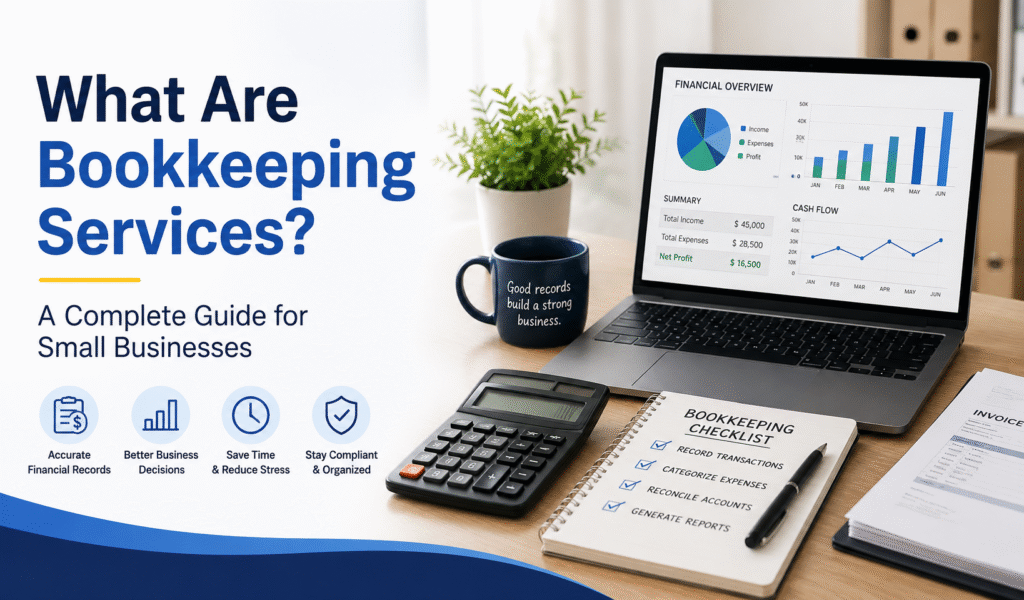
Bookkeeping services help businesses record, organize, and maintain their day-to-day financial transactions. These services may include categorizing expenses, reconciling bank accounts, tracking invoices, managing accounts payable, and preparing regular financial reports.
For Canadian small businesses, proper bookkeeping is more than an administrative task. It helps owners understand cash flow, prepare for taxes, monitor profitability, and maintain the records required by the Canada Revenue Agency.
According to Innovation, Science and Economic Development Canada, approximately 1.08 million of Canada’s 1.10 million employer businesses were small businesses as of December 2023. That means small businesses are about 98.2% of all businesses in the country.
Whether you run a consulting business in Toronto, a construction company in Calgary, an e-commerce store in Vancouver or a local service business in Halifax, accurate books give you a clearer picture of where your money is coming from and where it is going.
This guide explains what bookkeeping services include, why they matter, how they differ from accounting, and how to choose the right bookkeeping solution for your business.
What Are Bookkeeping Services?
Bookkeeping services involve recording and maintaining a business’s financial transactions in an organized financial system. The goal is to keep the company’s financial information accurate, complete, and up to date.
BDC defines bookkeeping as recording every business transaction in a financial record-keeping system, such as accounting software or a spreadsheet. These transactions can include income, expenses, asset purchases, loan payments, lease payments, and investments.
A bookkeeper may record transactions manually, use cloud accounting software, or combine automated tools with professional review.
In practical terms, bookkeeping answers questions such as the following:
- How much revenue did the business earn?
- Which customers still owe money?
- Which supplier invoices need to be paid?
- How much was spent on advertising, rent, or payroll?
- Does the bank balance match the accounting records?
- How much GST/HST has been collected?
- Is the business making a profit?
- Does the company have enough cash to cover upcoming bills?
Without organized bookkeeping, answering these questions can involve searching through bank statements, receipts, emails, and spreadsheets. That is not financial management. That is a paperwork treasure hunt, and the treasure is usually an unpaid invoice.
What Is the Main Purpose of Bookkeeping?
The main purpose of bookkeeping is to create a reliable financial record of business activity. These records allow owners, accountants, and other authorized users to understand the company’s financial position.
Accurate bookkeeping supports several business functions:
- Financial reporting
- Cash-flow management
- Tax preparation
- Business planning
- Budgeting
- Payroll administration
- GST/HST reporting
- Financing applications
- Expense control
- Customer collection
- Supplier payment management
The CRA also requires businesses to maintain records that support the income, expenses, and other amounts reported on tax and information returns. Complete records can help identify income sources and determine whether a business may need to charge GST/HST.
Bookkeeping therefore serves two purposes: it helps you operate the business, and it helps you support the numbers reported to tax authorities.
Read More: Best Online Bookkeeping Services
What Is Included in Bookkeeping Services?
The exact service package depends on the business, transaction volume, and provider. However, most professional bookkeeping services include several core responsibilities.
1. Recording and Categorizing Transactions
A bookkeeper records money entering and leaving the business. Each transaction is assigned to an appropriate account in the company’s chart of accounts.
Common categories include:
- Sales revenue
- Advertising
- Office supplies
- Rent
- Utilities
- Insurance
- Professional fees
- Vehicle expenses
- Travel
- Payroll
- Software subscriptions
- Equipment purchases
- Bank charges
- Loan payments
Correct categorization matters because it affects financial reports and tax preparation. For example, an equipment purchase may need to be treated differently from an ordinary office-supply expense.
A professional bookkeeper should not guess when a transaction is unclear. The provider should flag it and request supporting information from the business owner.
2. Bank and Credit-Card Reconciliation
Reconciliation compares transactions recorded in the bookkeeping system with bank and credit-card statements. The objective is to confirm that the records agree.
A monthly reconciliation can identify:
- Duplicate transactions
- Missing deposits
- Unrecorded bank fees
- Incorrect transaction amounts
- Payments recorded twice
- Deposits applied to the wrong customer
- Old outstanding checks
- Potential unauthorized activity
A bank balance alone does not show whether the books are correct. A business can have money in the bank while still having inaccurate income, unpaid obligations, or duplicated expenses.
3. Accounts Receivable Management
Accounts receivable represents money customers owe for products or services already provided. BDC notes that receiving this money faster can help a business pay its own liabilities and improve cash availability.
Bookkeeping services may include:
- Creating customer invoices
- Recording payments
- Applying payments to the correct invoices
- Monitoring overdue accounts
- Preparing accounts-receivable aging reports
- Sending payment reminders
- Identifying customers with repeated late payments
An aging report typically groups outstanding invoices by age, such as current, 1–30 days overdue, 31–60 days overdue, and more than 60 days overdue.
This report helps owners focus collection efforts before unpaid invoices become serious cash-flow problems.
4. Accounts Payable Management
Accounts payable represents money the business owes suppliers and service providers.
Accounts-payable bookkeeping may include the following:
- Entering supplier bills
- Confirming payment due dates
- Scheduling payments
- Recording completed payments
- Tracking supplier credits
- Preventing duplicate payments
- Preparing accounts-payable reports
This process helps businesses avoid missed bills, unnecessary late fees and damaged supplier relationships.
However, payment approval should normally remain with an authorized person inside the business. A bookkeeper may prepare the payment, but the owner or manager should maintain appropriate oversight.
5. Receipt and Document Organization
Invoices, receipts, contracts, statements, and payment confirmations support the transactions recorded in the books.
A bookkeeper may organize these documents through the following:
- Cloud storage folders
- Receipt-capture applications
- Accounting software attachments
- Shared document portals
- Clearly labelled digital folders
The CRA allows businesses to keep records in acceptable paper or electronic formats, but records must remain accessible and readable. Businesses using electronic systems must also maintain appropriate electronic records and backups.
Simply photographing every receipt and leaving the images unnamed in a phone gallery is not an ideal filing system. It is better than losing them, but only slightly.
6. GST/HST Tracking
For Canadian businesses, bookkeeping services may include tracking GST/HST charged on sales and GST/HST paid on eligible business purchases.
A bookkeeper may help:
- Record taxable sales
- Separate tax from revenue
- Record tax paid on purchases
- Track potential input tax credits
- Reconcile GST/HST accounts
- Prepare reports for return filing
- Monitor filing periods and deadlines
For most businesses, the small-supplier threshold is generally $30,000 in worldwide taxable supplies. However, the registration rules depend on whether the threshold is exceeded in a single calendar quarter or over four consecutive calendar quarters. Business owners should review their specific situation using current CRA guidance rather than treating the threshold as a simple annual revenue rule.
A bookkeeper can organize the relevant figures, but the service agreement should clearly state whether the provider also prepares or files GST/HST returns.
7. Payroll Bookkeeping Support
Some bookkeeping providers manage payroll, while others only record payroll reports created by a separate payroll system.
Payroll bookkeeping may cover:
- Gross wages
- Employee deductions
- Employer contributions
- Vacation pay
- Bonuses
- Payroll remittances
- Payroll liabilities
- T4-related reporting support
Canadian employers may have responsibilities involving income tax deductions, Canada Pension Plan contributions, and Employment Insurance premiums. Payroll errors can affect employees as well as the employer, so the person handling payroll should understand Canadian requirements.
Businesses should also reconcile payroll reports with amounts withdrawn from the bank and amounts recorded in the general ledger.
8. Monthly Financial Reporting
Bookkeepers can prepare regular reports that summarize the company’s financial activity.
Common reports include:
- Income statement
- Balance sheet
- Cash-flow statement
- General ledger
- Trial balance
- Accounts-receivable aging report
- Accounts-payable aging report
- Sales report
- Expense report
- Budget-versus-actual report
These reports become more useful when delivered monthly and explained in plain language. A twenty-page report that no one reads is not automatically better than a two-page dashboard that helps the owner make a decision.
9. Year-End Bookkeeping Support
Before tax returns or year-end financial statements are prepared, the bookkeeping records usually need to be reviewed and organized.
Year-end support may include:
- Reconciling all balance-sheet accounts
- Reviewing outstanding invoices
- Confirming supplier balances
- Recording loan interest
- Identifying asset purchases
- Reviewing shareholder or owner transactions
- Organizing tax documents
- Preparing reports for the accountant
- Responding to the accountant’s questions
Good year-round bookkeeping can reduce the amount of cleanup required at year-end. BDC emphasizes that tax readiness requires ongoing attention and that waiting until fiscal year-end limits an owner’s ability to use financial information for timely business decisions.
What Financial Reports Does Bookkeeping Produce?
Bookkeeping provides the data used to create financial reports. These reports help owners understand profitability, financial position, and cash movement.
Income Statement
An income statement, sometimes called a profit and loss statement, shows revenue and expenses over a specific period.
It helps answer:
- Did the business earn a profit?
- Which expenses increased?
- Did revenue improve compared with the previous period?
- Which products or services generated the most income?
- Is the gross margin improving or declining?
The income statement does not necessarily show how much cash is currently available. A business may report profit while still waiting for customers to pay invoices.
Balance Sheet
A balance sheet shows what the business owns, what it owes, and the owner’s or shareholders’ equity at a specific date.
BDC explains that a balance sheet is based on the equation:
Assets = Liabilities + Shareholders’ Equity
Assets may include cash, customer receivables, inventory, and equipment. Liabilities may include supplier bills, credit-card balances, loans, and tax obligations.
Cash-Flow Statement
A cash-flow statement tracks cash entering and leaving the company during a particular period.
This report helps owners understand whether the business generates enough cash to support its operations, even when the income statement shows a profit.
Cash flow and profit are related, but they are not the same. For example, a business may record a large sale as revenue but not receive the customer’s payment for another 60 days.
Why Are Bookkeeping Services Important for Small Businesses?
Bookkeeping services provide more than organized records. They give owners dependable financial information for running the business.
Better Cash-Flow Visibility
Regular bookkeeping shows how much cash is available, which payments are due and which customer invoices remain outstanding.
This allows owners to plan for the following:
- Payroll
- Supplier payments
- Rent
- GST/HST remittances
- Loan payments
- Equipment purchases
- Seasonal slowdowns
Without timely books, cash-flow decisions are often based on the current bank balance. That can be misleading because the account may not reflect upcoming obligations.
Easier Tax Preparation
When transactions are categorized and supporting documents are organized throughout the year, tax preparation becomes more efficient.
A clean set of books helps an accountant review:
- Business income
- Operating expenses
- Capital purchases
- Sales-tax accounts
- Payroll records
- Owner transactions
- Loan balances
Bookkeeping does not guarantee a lower tax bill. It does, however, give the tax professional more reliable information and helps reduce last-minute confusion.
More Informed Decisions
Business owners need accurate figures when deciding whether to
- Hire an employee
- Increase prices
- Purchase equipment
- Reduce expenses
- Open another location
- Add a service
- Apply for financing
- Stop offering an unprofitable product
Accounting information is intended to support informed, data-based business decisions. It may also be reviewed by bankers, investors, buyers, and other external users.
Faster Collection of Customer Payments
Regular accounts-receivable reporting helps identify overdue invoices before they are forgotten.
Businesses can then follow up consistently, resolve customer disputes, and improve their collection process.
A sale is encouraging. A paid sale is more useful.
Improved Financial Control
Monthly reconciliations and account reviews can reveal missing entries, duplicate charges, unusual payments and unresolved balances.
Bookkeeping alone cannot prevent fraud. However, maintaining clear records, separating responsibilities, and reviewing reports regularly can make irregularities easier to notice.
More Time for Business Operations
Owners often begin by doing their own bookkeeping to save money. This can work when the business is small and its transactions are simple.
As the business grows, bookkeeping may consume evenings, weekends, and time that would otherwise be used for customer service, operations, or sales.
Outsourcing repetitive financial administration allows owners to focus on work that requires their direct involvement.
What Records Must Canadian Businesses Keep?
Canadian businesses should keep records that support their income, expenses, tax calculations, and other reported amounts.
Depending on the business, records may include the following:
- Sales invoices
- Purchase invoices
- Receipts
- Bank statements
- Credit-card statements
- Deposit records
- Contracts
- Payroll records
- GST/HST records
- Mileage logs
- Loan agreements
- Asset-purchase documents
- Inventory records
- Electronic transaction data
- Accounting ledgers
Complete records should explain the date, amount, nature, and business purpose of transactions.
How Long Must Business Records Be Kept in Canada?
The CRA generally requires businesses to keep records for six years from the end of the last tax year to which the records relate. Some records may need to be retained longer, and businesses generally need CRA permission before destroying required records early.
GST/HST records are also generally kept for six years from the end of the year to which they relate, although the CRA may require certain invoices or records to be kept longer.
Record-retention rules can differ in special situations, such as dissolved corporations, long-term property ownership, late returns, or active objections. Businesses should confirm the rules that apply to their circumstances.
What Is the Difference Between Bookkeeping and Accounting?
Bookkeeping focuses mainly on recording and organizing financial activity. Accounting uses financial information to analyze performance, prepare formal reports, and provide broader financial or tax guidance.
| Area | Bookkeeping | Accounting |
|---|---|---|
| Main purpose | Record and organize transactions | Analyze and interpret financial information |
| Typical frequency | Daily, weekly or monthly | Monthly, quarterly or annually |
| Common work | Reconciliations, invoices, expenses and ledgers | Financial statements, tax work and advisory |
| Main focus | Accuracy and completeness | Interpretation and decision support |
| Outputs | Updated books and routine reports | Formal reports, analysis and recommendations |
| Professional designation | Not always required | Certain services may require a CPA |
The two functions overlap, but they are not interchangeable.
A bookkeeper may prepare an income statement from the company’s records. An accountant may review that statement, make year-end adjustments, analyze tax implications, and advise the owner.
Small businesses often get the best results when the bookkeeper and accountant work together rather than correcting each other’s work once a year.
What Are the Main Types of Bookkeeping Services?
Small businesses can choose from several bookkeeping models.
DIY Bookkeeping
The business owner records transactions using a spreadsheet or accounting platform.
This may suit a new business with:
- Low transaction volume
- No employees
- Simple expenses
- Few sales-tax issues
- Strong financial organization
The owner still needs to learn the system, reconcile accounts, and maintain supporting documents.
In-House Bookkeeping
An employee performs bookkeeping inside the company.
This option can provide greater day-to-day availability and familiarity with operations. However, it also involves salary, training, supervision, software, and employee-related costs.
Freelance Bookkeeping
A self-employed bookkeeper works with the business for a fixed number of hours or a defined monthly service.
This model may offer flexibility, but the business should evaluate availability, backup coverage, data-security practices, and experience.
Outsourced Bookkeeping Services
An external bookkeeping company manages some or all of the financial-recording process.
Outsourced bookkeeping services may provide the following:
- A dedicated bookkeeper
- Monthly reconciliations
- Standard reporting
- Receipt management
- Payroll support
- Accounts payable
- Accounts receivable
- Year-end accountant coordination
This model can be useful when a business needs recurring support but does not require a full-time employee.
Online or Virtual Bookkeeping Services
Online bookkeeping services are delivered remotely through cloud software, digital documents, and virtual communication.
They may work well for businesses that:
- Use digital banking
- Issue electronic invoices
- Store receipts online
- Have remote teams
- Need access to current reports
- Operate in several locations
The provider should use secure systems, appropriate access controls, and documented backup procedures.
Can Accounting Software Replace a Bookkeeper?
Accounting software can automate routine work, but it does not automatically guarantee correct books.
BDC notes that accounting platforms can help businesses pay bills, create invoices, calculate sales taxes, automate general ledger transactions, and track revenue, expenses, and cash flow. More advanced systems may also provide payroll, inventory, and reporting tools.
Software can reduce manual entry by importing bank transactions and applying rules. However, someone still needs to:
- Review imported transactions
- Correct incorrect categories
- reconcile accounts
- Investigate duplicates
- Maintain supporting documents
- Handle unusual transactions
- Review GST/HST treatment
- Confirm balances
- Interpret financial reports
Automation is useful, but it can repeat mistakes with impressive speed. Human review remains important.
Should You Do Your Own Bookkeeping or Hire a Professional?
DIY bookkeeping may be practical when the business is new, transactions are limited, and the owner understands the basic process.
Professional bookkeeping becomes more valuable when complexity or transaction volume increases.
Consider hiring a bookkeeper when:
- Your books are several months behind
- You regularly miss invoices or bills
- Bank accounts have not been reconciled
- GST/HST reporting has become confusing
- Payroll takes too much time
- You cannot explain the figures in your reports
- Personal and business spending are mixed
- Your accountant spends significant time cleaning the records
- You are applying for financing
- You are hiring employees
- You are expanding into new locations or services
- Administrative work is affecting customer service
You do not need to wait for a bookkeeping emergency. Catch-up work usually costs more and creates more stress than maintaining the records consistently.
How Much Do Bookkeeping Services Cost in Canada?
The cost of bookkeeping services in Canada depends on the amount and complexity of work. There is no single reliable price that applies to every small business.
Providers may charge the following:
- An hourly rate
- A fixed monthly fee
- A transaction-based fee
- A customized service package
- A separate catch-up or cleanup fee
The main cost factors include the following:
- Monthly transaction volume
- Number of bank accounts
- Number of credit cards
- Number of employees
- Payroll frequency
- Accounts-receivable volume
- Accounts-payable volume
- GST/HST filing frequency
- Inventory complexity
- Foreign-currency transactions
- Industry-specific requirements
- Quality of existing records
- Frequency of reporting
- Required software integrations
A low advertised price may cover only transaction categorization and one bank account. It may not include payroll, invoicing, bill payment, GST/HST support, cleanup, or communication with your accountant.
Compare the scope of service, not just the headline fee.
How Do You Choose the Right Bookkeeping Service?
Choose a provider that understands your business, explains its process clearly, and defines exactly what is included.
Look for Canadian Bookkeeping Knowledge
The provider should understand common Canadian requirements, including:
- GST/HST tracking
- Payroll liabilities
- CRA record retention
- Canadian bank feeds
- Year-end coordination
- Provincial sales-tax considerations where applicable
A provider does not need to know every answer instantly, but it should know when a question requires guidance from a CPA or tax specialist.
Check Relevant Industry Experience
Bookkeeping for a consultant is different from bookkeeping for a restaurant, construction contractor, or e-commerce retailer.
Industry experience may be especially helpful when dealing with:
- Inventory
- Project costing
- Progress billing
- Tips
- Multiple payment processors
- Subcontractors
- Customer deposits
- Foreign currencies
- Multiple locations
Ask About the Monthly Process
Find out:
- How documents are submitted
- When reconciliations are completed
- Which reports are delivered
- How questions are handled
- Who reviews the work
- When monthly books are considered closed
- How corrections are documented
- Whether your accountant can access the records
Review Data Security and Access
Ask how the provider protects financial information.
Important considerations include:
- Multi-factor authentication
- User-specific access
- Secure document sharing
- Backup procedures
- Staff-access controls
- Data ownership
- Account termination procedures
- Software administrator permissions
Avoid sharing one password among several people. Each user should normally have individual access based on their role.
Confirm the Scope in Writing
The service agreement should state:
- Services included
- Services excluded
- Monthly deadlines
- Client responsibilities
- Provider responsibilities
- Software costs
- Additional fees
- Cancellation terms
- Data-ownership rules
- Response expectations
- Catch-up work charges
Clear scope prevents the classic disagreement in which the business expected “full bookkeeping” while the provider understood “monthly bank reconciliation only.”
What Common Bookkeeping Mistakes Should Small Businesses Avoid?
Mixing Personal and Business Expenses
Using one account for both personal and business spending makes categorization, tax preparation, and financial reporting more difficult.
Open separate business banking and credit-card accounts where appropriate.
Delaying Reconciliations
Reconciliation becomes harder when several months of transactions accumulate. Missing information is also more difficult to remember.
Complete reconciliations monthly, or more frequently for high-volume businesses.
Recording Loan Payments as One Expense
Loan payments may include principal and interest. These components may need different accounting treatment.
Use lender statements or amortization schedules to separate them correctly.
Treating Every Purchase as an Immediate Expense
Long-term assets such as machinery, computers, or furniture may require different treatment from routine operating expenses.
Flag significant purchases for accountant review.
Ignoring Accounts Receivable
Revenue on a report does not pay bills until the customer pays the invoice.
Review overdue receivables regularly and follow up using a consistent process.
Relying Only on the Bank Balance
The bank account does not show all unpaid bills, uncollected invoices, tax obligations, or accounting adjustments.
Review the bank balance together with financial reports and upcoming commitments.
Waiting Until Tax Season
Year-end cleanup can reveal months of duplicated entries, missing documents, and unreconciled accounts.
Maintain the books throughout the year so the information can support decisions before tax season arrives.
Frequently Asked Questions
What exactly does a bookkeeping service do?
A bookkeeping service records transactions, categorizes income and expenses, reconciles financial accounts, and prepares routine financial reports. Depending on the package, it may also manage invoices, bills, payroll records, GST/HST tracking, and year–end preparation.
Does every small business in Canada need a bookkeeper?
A business does not necessarily have to hire an external bookkeeper. However, the business must maintain adequate financial records. The owner may handle the work personally, assign it to an employee, or outsource it to a professional.
How often should bookkeeping be completed?
Most small businesses should update and review their books at least monthly. Businesses with high transaction volumes, frequent customer payments, or tight cash flow may need weekly or daily processing.
Can a bookkeeper file GST/HST returns?
Some bookkeepers prepare and file GST/HST returns, while others only prepare the supporting reports. Confirm the provider’s qualifications, authorization, and service scope before assuming return filing is included.
Does a bookkeeper prepare income-tax returns?
Some bookkeeping firms also offer tax-preparation services, but bookkeeping and tax preparation are separate functions. Complex corporate, personal, or cross-border tax matters may require a qualified accountant or tax professional.
Can a bookkeeper handle payroll?
Yes, many bookkeepers process payroll or record payroll reports from a separate payroll system. The service agreement should specify who calculates deductions, submits remittances, and prepares year-end payroll documents.
What is monthly bookkeeping?
Monthly bookkeeping usually includes recording transactions, reconciling bank and credit-card accounts, reviewing accounts payable and receivable, correcting coding errors, and preparing monthly financial reports.
How long should Canadian businesses keep bookkeeping records?
Businesses generally need to keep required records for six years from the end of the last tax year to which they relate. Certain records may need to be retained longer, depending on the business and circumstances.
Are online bookkeeping services safe?
Online bookkeeping can be secure when the business and provider use reputable software, multi-factor authentication, controlled user access, secure document exchange, and reliable backups. No system is risk-free, so businesses should review the provider’s security and data-ownership policies.
Can bookkeeping software replace an accountant?
Software can automate transaction processing and reporting, but it does not replace all professional judgment. Businesses may still need a bookkeeper for record accuracy and an accountant for financial statements, tax matters, adjustments and strategic advice.
Final Thoughts
Bookkeeping services give small businesses a structured way to record transactions, reconcile accounts, monitor payments, and produce reliable financial reports.
For Canadian business owners, good bookkeeping also supports CRA record requirements, GST/HST tracking, payroll administration, tax preparation, and year-round decision-making.
The best bookkeeping system is not necessarily the most expensive or complicated one. It is the system that stays current, produces accurate information, and gives the owner enough clarity to act.
A small business should know what it earned, what it spent, what customers owe, what bills are due, and how much cash is available. When those answers require three spreadsheets, two bank logins, and a call to someone who left the company last year, it may be time to improve the bookkeeping process.
Professional bookkeeping services can bring order to that process, but the business owner should remain involved. Review monthly reports, ask questions, maintain access to the records, and make sure responsibilities are clearly documented.